Practical Guide·The Studio

DOG PORTRAITS FROM PHOTOS.

The portrait can only be as specific as the source.

A custom dog portrait begins with a photograph. This is the part of the process buyers tend to think about least, and it is the part that affects the finished work most.

The portrait can only be as specific as the source. The painter — or in our case, the AI model and Mercy's review — works from the image you submit. If the eyes are sharp, the markings are clear, and the dog's expression is recognizable, the portrait is built on a strong foundation.

This page is a practical guide. It is not a sales pitch. It is the curator-as-guide explaining how to select the photograph that will give your portrait the best chance of looking like him.

§ I

What a Good Source Photograph Looks Like
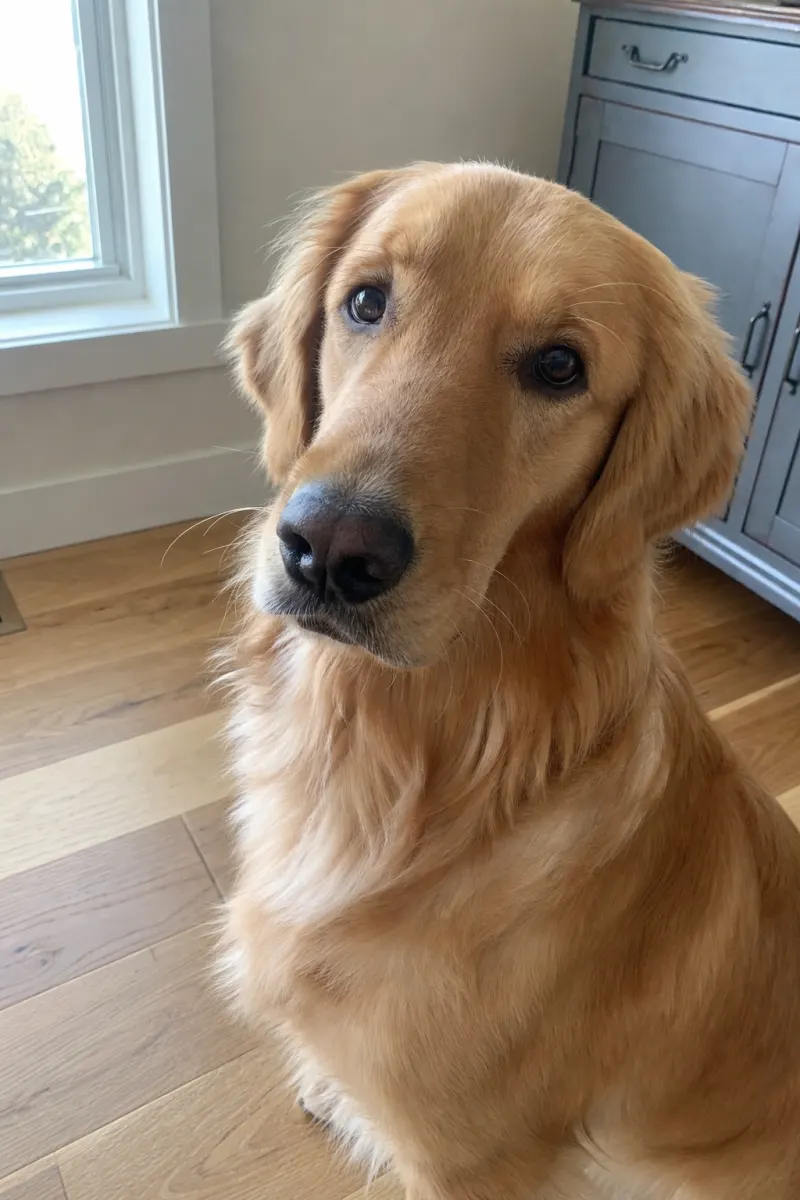
Light. Natural light is the painter's preferred light, and it has been since the seventeenth century. A photograph taken near a window, with daylight falling on the dog from one side, gives a clear three-dimensional read of the face. What you want to avoid: on-camera flash. Flash flattens the face into a two-dimensional plane and frequently produces a hot reflective spot on the muzzle.

Eye level. Get down to the dog's eye level. The instinct is to photograph the dog from human eye level looking down — but the portrait will be displayed at human eye level on a wall. The source photograph should match.

Sharpness on the eyes. If only one part of the photograph is in focus, it should be the eyes. Eyes carry the dog's specific identity in a way nothing else in the face does.

A relaxed expression. The best dog portraits do not come from posed sit-stays. A better source is the photograph where the dog is relaxed — looking just past the camera, or watching something happen in the room.

Head and shoulders, not just the face. Send a photograph that includes the full head and at least the chest and shoulders. Head-and-shoulders is the single most useful crop.
§ II

Common Mistakes to Avoid

Ranked by how often they cause review issues:

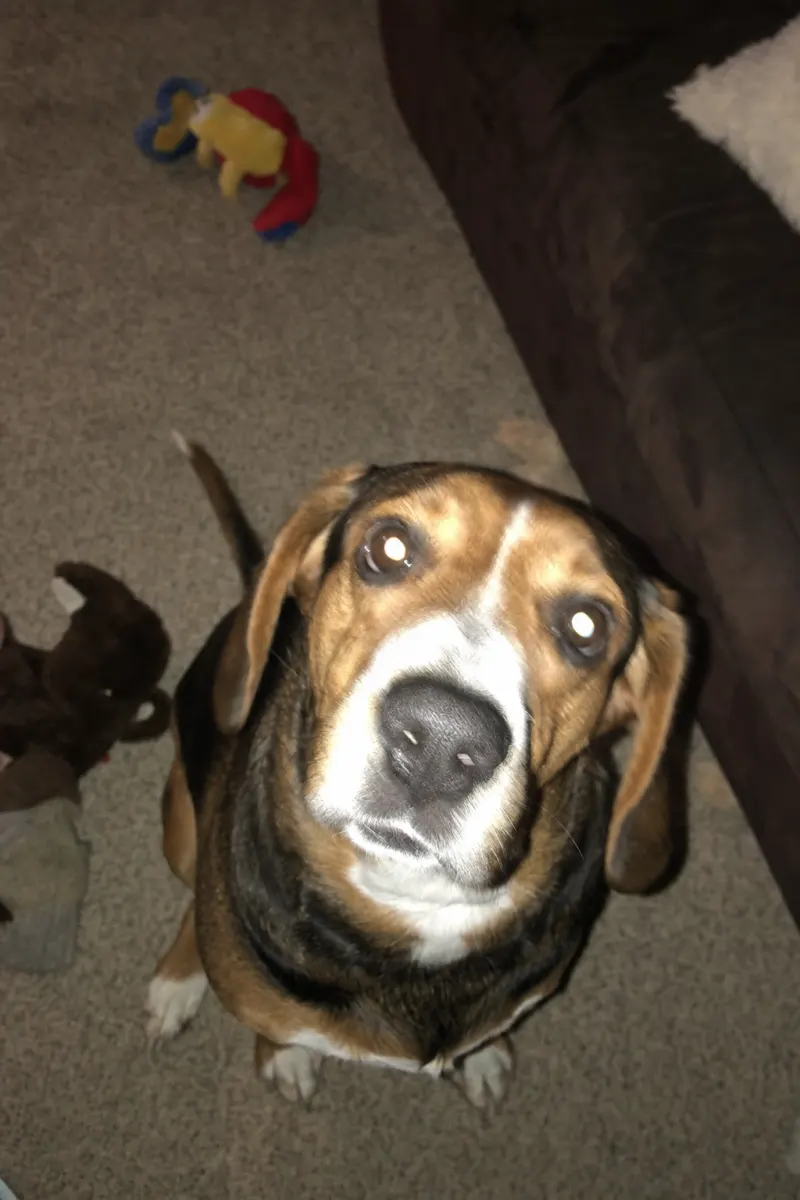
  • Flash glare on the muzzle — washes out fur color, removes the soft transitions in the face
  • Top-down angle — flattens the head, removes the eye-line that will read on the wall
  • Heavy filter / Instagram portrait mode — Instagram filters change coat color and background, which the AI model will then take as truth
  • Low resolution — a photograph below 1500 pixels on the long side starts to lose the detail the eye needs
  • Distracting backgrounds — toys, cluttered floors, busy household objects compete for the painter's attention
  • Multiple dogs in the same frame when you only want a portrait of one

If your photograph has one or more of these issues, it is not disqualifying. It just means Mercy will look at the rendering more carefully when it comes back.

§ III

What We Work With Anyway

Sometimes the photograph in the file is the photograph in the file. You may have lost the dog. You may have only one image left that truly feels right. You may have inherited the dog from someone whose phone was older and whose photographs are softer than yours would have been.

Send what you have.

The studio works with imperfect photographs more often than perfect ones. Mercy reviews the rendering against whatever source we have, and if she can recognize the dog — if the eyes are reading right, if the markings are intact, if the face is unmistakably him — the portrait ships. If she cannot, she sends it back for re-rendering until the likeness holds.

The right photograph is helpful. The right reviewer is the difference.

§ IV

What Mercy Actually Looks At

When the rendering comes back, Mercy compares it against your source photograph. She looks at the things that distinguish your dog from every other dog of his breed:

  • The chest markings — the specific shape of the white patch, the line where the cream meets the brown
  • The ear shape and carriage — folded vs. standing vs. tipped, the angle they rest at when he's listening
  • The eyes — color, depth, catchlight, the slight difference between left and right that you'd recognize across a crowded room
  • The muzzle — its asymmetry, the precise line of the lip, the gray (if any) on the chin
  • The expression — whether he looks like himself when he is paying attention to something, or when he is not

If the rendering hits all five, the portrait ships. If one is wrong, the rendering goes back. We re-render until the likeness holds. This is the part we mean when we say hand-reviewed.

§ V

If Your Dog Has Passed

Memorial commissions have their own sensitivities, and the source photograph is often the most sensitive part. You may only have one photograph that feels right. You may have an older image — from before he started slowing down — that captures him at the age you remember rather than at the age he was in his last weeks.

All of these are useful starting points. We render the dog at the age you knew him last, unless you ask us not to. Tell us which when you order.

For the longer treatment of memorial commissions, see Memorial Dog Painting.

Begin His Portrait

Begin with the photograph that already feels true.

The right photograph is the one where you can see him clearly. Eyes sharp, face lit, expression recognizable. It does not have to be a formal portrait. It just has to be him.

Common Questions

Plainly answered.

Can I send multiple photographs?
Yes. Send the strongest one as your primary reference, and any additional photographs that show angles or markings the primary image misses. Mercy will use them all during review.
What if my photograph is from years ago?
That's fine. Older photographs are often the best ones — they often catch the dog in his prime, with sharper eyes and stronger color than recent phone photographs taken in a hurry. We can render him at the age the photograph captured him.
Does the photograph need to be high resolution?
Higher resolution helps. Below ~1500 pixels on the long side, the model has less detail to work with. But Mercy has reviewed renderings made from much lower-resolution sources when the source was the only one available, and many of them have shipped successfully.
What if my dog won't sit still for a new photograph?
Most won't. The best photographs are usually candid — taken when he was looking at something else, or settled in a familiar spot. Don't try to pose him. Wait for the moment, take the photograph, send the result.
Can I use a screenshot from a video?
Generally no — video frames are usually too low-resolution and slightly motion-blurred. If it's the only image you have, send it. Mercy will review carefully.