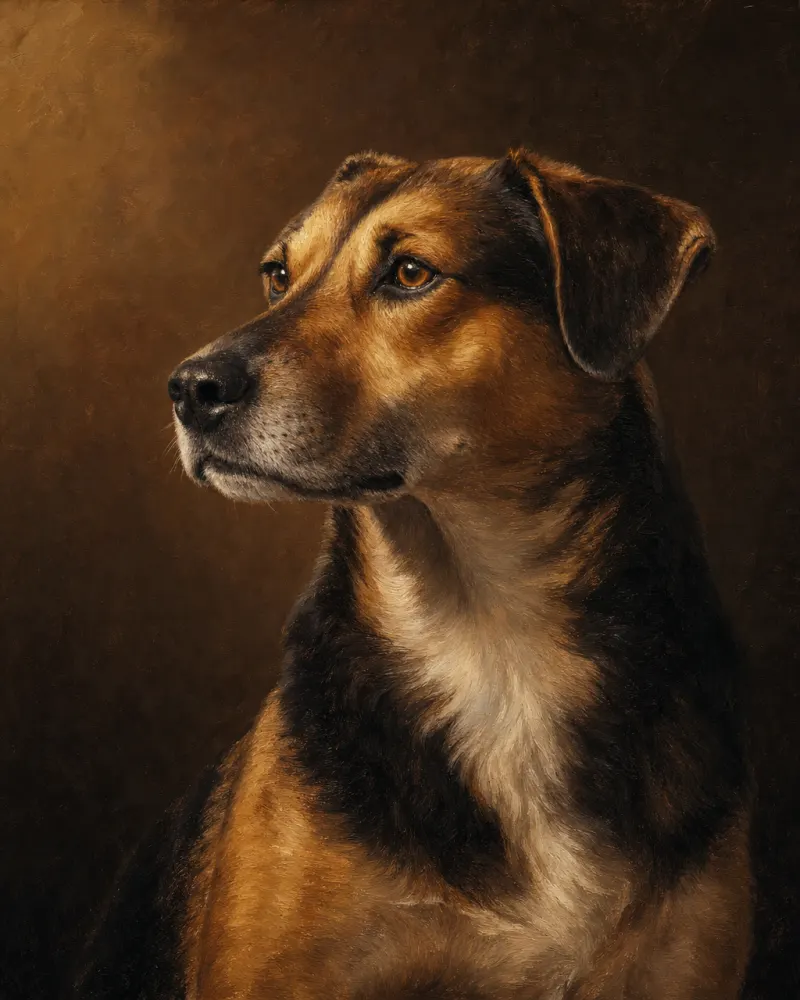
The Historical Artists
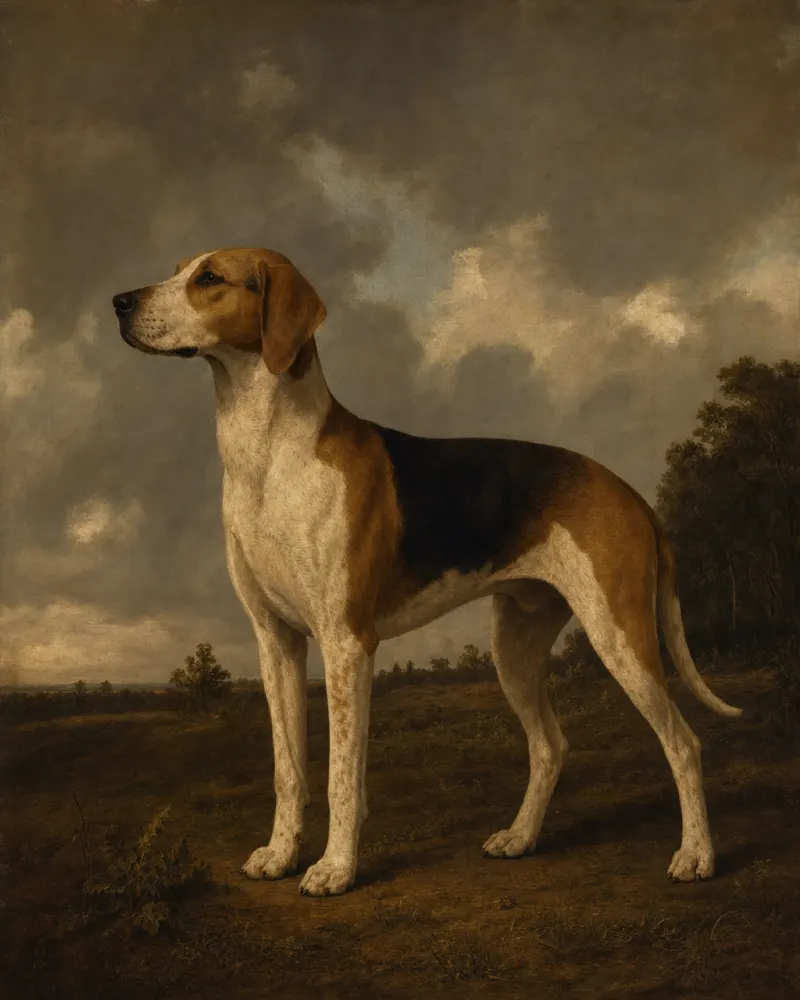
The canon of dog portrait artists is mostly British and mostly 18th-19th century.
George Stubbs (1724-1806) — best known for his horses, but a serious painter of hunting dogs. Stubbs dissected horses to understand their anatomy before he painted them; the same scientific seriousness shows in his rendering of foxhounds and pointers.
Sir Edwin Landseer (1802-1873) — Queen Victoria's favored painter for animal subjects. Knighted in 1850. Producer of the Victorian century's most famous dog paintings, including Dignity and Impudence (1839) and The Old Shepherd's Chief Mourner (1837). Landseer made the dog into a moral subject of major commission.
Sir Alfred Munnings (1878-1959) — sporting painter who carried the tradition into the 20th century. President of the Royal Academy 1944-1949.
Maud Earl (1864-1943) — preferred dog painter of King Edward VII. Earl's spaniels and formal kennel-club portraits sell today in the $30,000-$120,000 range.
John Emms (1844-1912) — specialized in foxhounds and working dogs at rest in stable interiors. Emms canvases sell today around $15,000-$60,000.
For longer biographies, see vintagedogoilpainting.com/painters/.
These are art-history references on this page. They are not claimed as our brand's authority. We are not Landseer; we do not paint in the Stubbs studio. They are the historical context that explains the visual register a serious dog portrait still uses today.