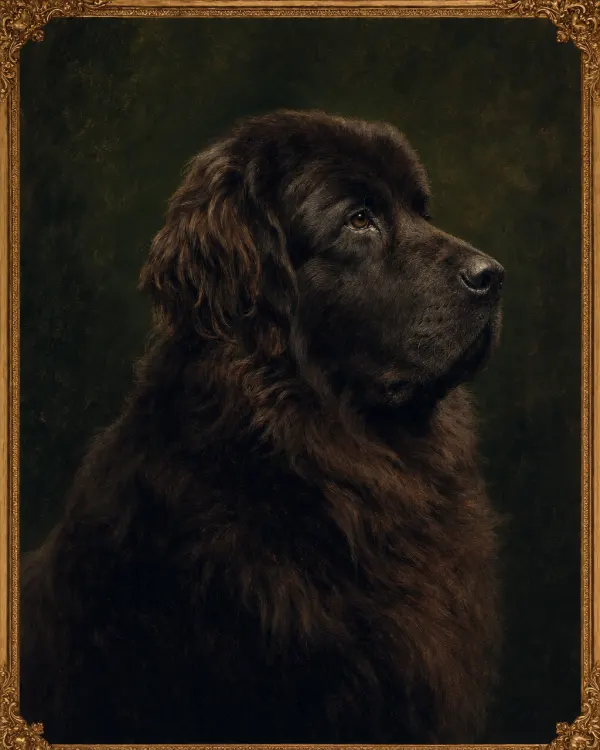
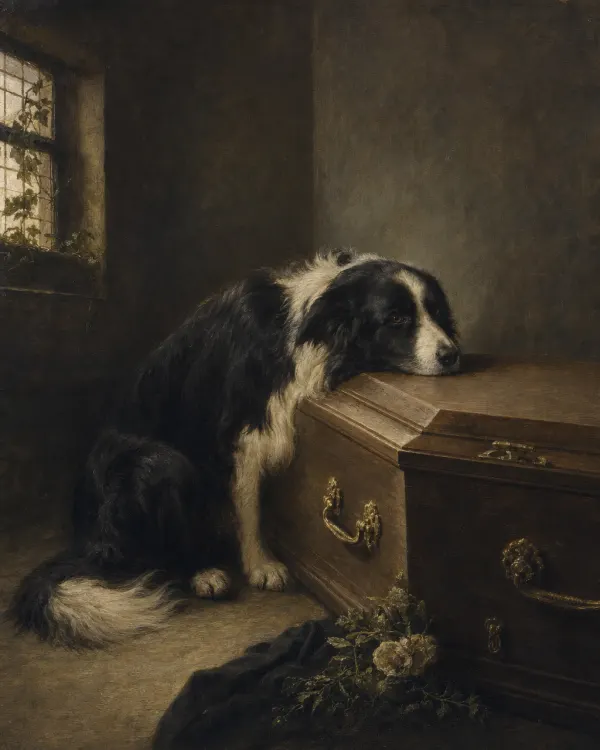
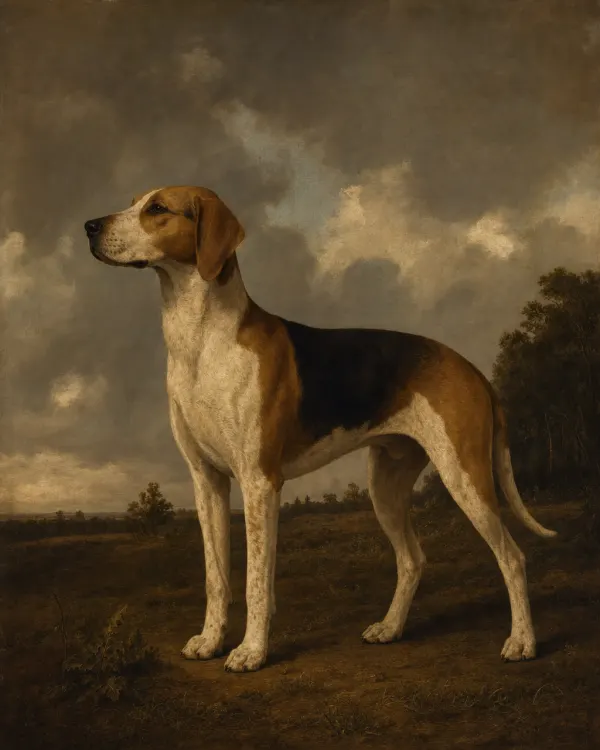
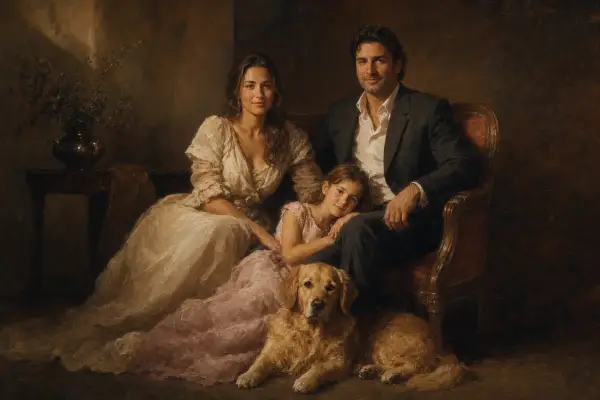
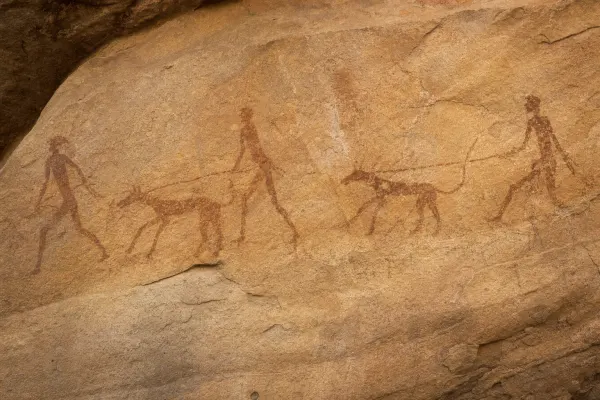
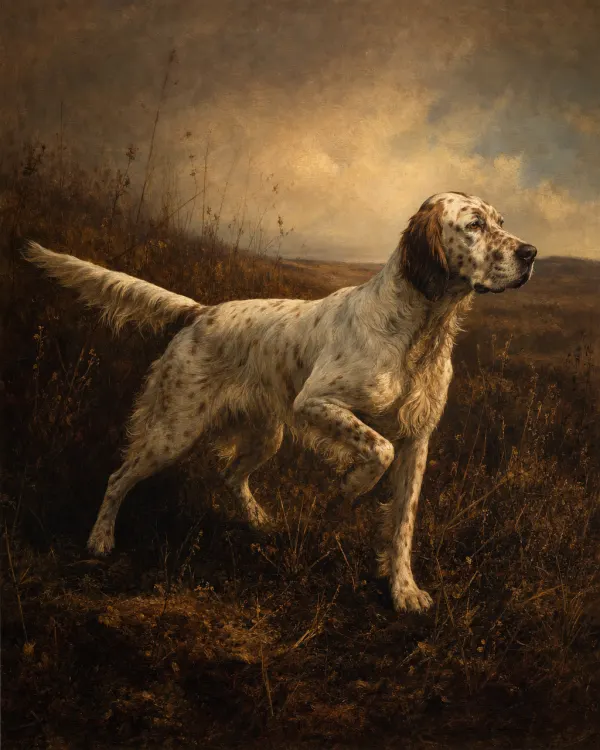
The premise of the house is straightforward. For nearly four hundred years, oil painting in the Western tradition has treated the dog as a subject worth painting — the way it has treated generals, lords, mothers, and infants. The dog has earned the gravity. Stubbs gave him anatomy. Landseer gave him moral seriousness. Earl gave him interior life. Emms painted him at rest in the working stable. Munnings carried the tradition into the early twentieth century with looser brushwork and brighter outdoor light. The composition the eye still trusts — warm palette, soft directional light, dark studio ground, the subject foregrounded and given room — has not changed substantially since the seventeenth century. The painters changed. The visual grammar held.
A buyer arriving at this house is usually doing one of two things. Either looking for a way to commission a portrait of a specific dog — the spaniel asleep on the rug, the senior who passed in November, the dachshund pup who has begun to assert himself — or reading because the canon itself is interesting. Both are welcome. The halls below are arranged to serve either purpose. Some open onto the historical record. Others open onto the practical question of how a commission begins. Each links back to the studio's commission page when it makes sense, and otherwise lets you read.
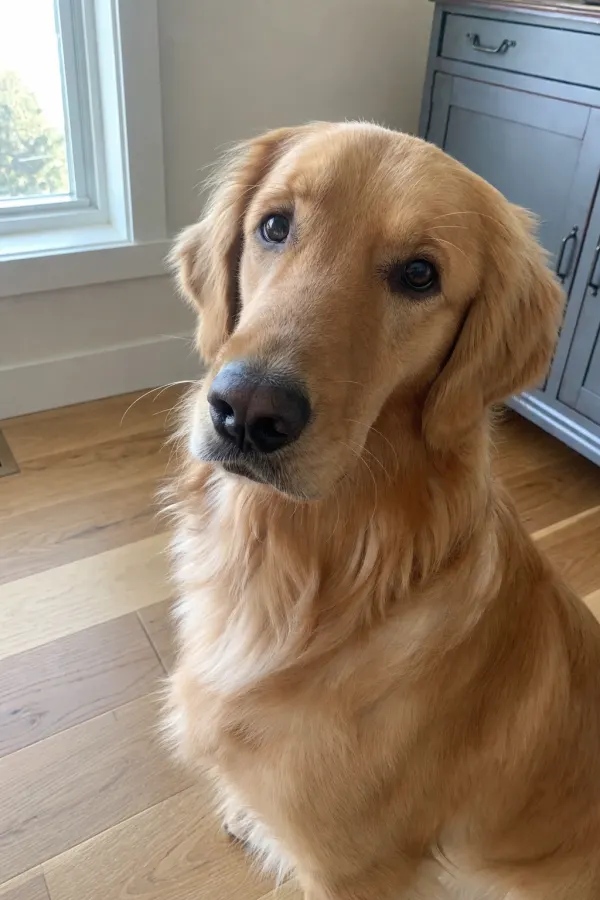
A note on the process before you begin. Every portrait commissioned through Pet Pic Portraits is AI-rendered and hand-reviewed by Mercy, the studio's founding reviewer. The portraits are not hand-painted. They are rendered in the chosen register — for this house, almost always classical oil — and then reviewed against the source photograph for likeness, markings, expression, and the small specific details that distinguish the dog from every other dog of his breed. If the likeness does not hold, the work is not ready. The standard is old-fashioned even if the production is modern. We disclose this on every page because a custom-portrait studio that pretends otherwise has nothing to stand on.