Chronological Exhibit·Dog Oil Paintings

OLD DOG PAINTINGS.

Ten thousand years of the dog as a worthy subject.

The dog has been painted longer than any other domesticated animal. Ten thousand years, by the most generous reading.

Long before he became a sentimental household object, before he was a "good boy," before he was photographed casually a thousand times a week — he was carved into rock. He was painted onto the walls of tombs. He was set into mosaic floors. He was illuminated into the margins of manuscripts. He was placed at the feet of dukes and the elbows of merchant wives.

This is not a small fact. A subject who has lasted that long across that many cultures has earned the gallery wall.

This is the chronological exhibit. Read in order, or skip to the period that interests you.

§ I

Before the Canvas

Long before dogs appeared in oil paintings, they appeared on stone.

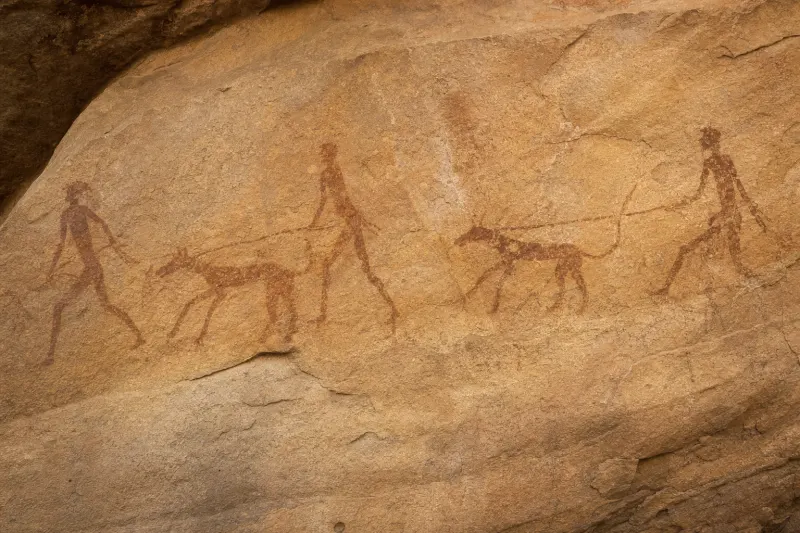
Prehistoric images from sites such as Bhimbetka in central India and Tassili n'Ajjer in the Algerian Sahara show dogs on leashes, hunting alongside human figures, painted onto rock faces in earth-tone ochres and umbers — pigments that are essentially the same warm palette serious oil painting still uses today. Dating is contested but the earliest of these images may be more than ten thousand years old.

These were not portraits in the modern sense. They were records of use, movement, and relationship. The dog was shown because the dog mattered.

These early images are spare, but they already contain the essential idea that carries through later dog painting: the dog is not simply background. He is part of the human story.

That is the beginning of the collection. Not the parlor. Not the palace. The rock wall.
§ II

Ancient Egypt: The Dog as Household and Sacred Figure

In ancient Egypt, dogs entered a more formal visual world.

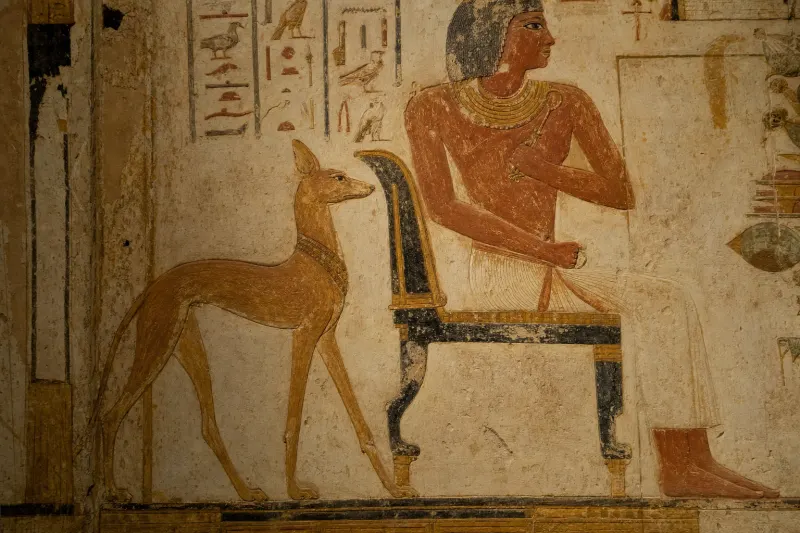
Sighthounds and hunting dogs appear in tomb paintings and domestic scenes, often shown with long bodies, alert posture, and close proximity to their owners. These dogs were rendered in strict profile, with the elongated geometric proportions consistent with the rest of the figural tradition — and almost always painted with the same gold-and-black structural palette used for figures of consequence.

There is also the sacred dimension. Anubis, the jackal-headed god associated with mummification and the afterlife, gave the canine form a place in religious imagery.

In Egyptian art, the dog could belong to the house. He could also belong to eternity.

§ III

Greece and Rome: The Warning at the Door

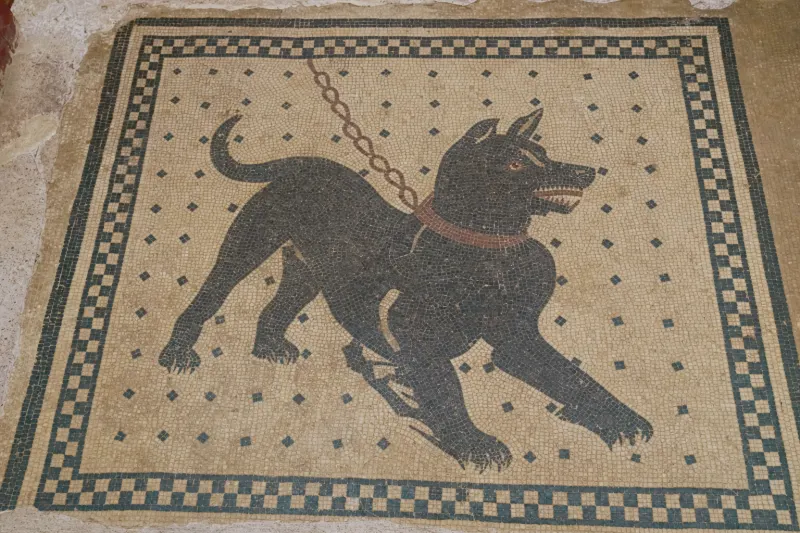
One of the most famous ancient dog images is the Roman "Cave Canem" mosaic from a doorway threshold in the House of the Tragic Poet at Pompeii — beware of the dog. A black-and-white mastiff-type dog, chained, set into the floor in tessellated tile not as decoration but as wayfinding.

It survived the eruption of Vesuvius in 79 CE and was excavated nearly two thousand years later in essentially the form the painters left it.

The phrase carries warning, but the image carries more. It shows the dog as guardian of the house, stationed between the private interior and the public street.

Roman mosaics and Greek vase scenes give dogs a directness that feels surprisingly modern. They are not softened into sentiment. They are alert, useful, present.

§ IV

Medieval and Renaissance Rooms

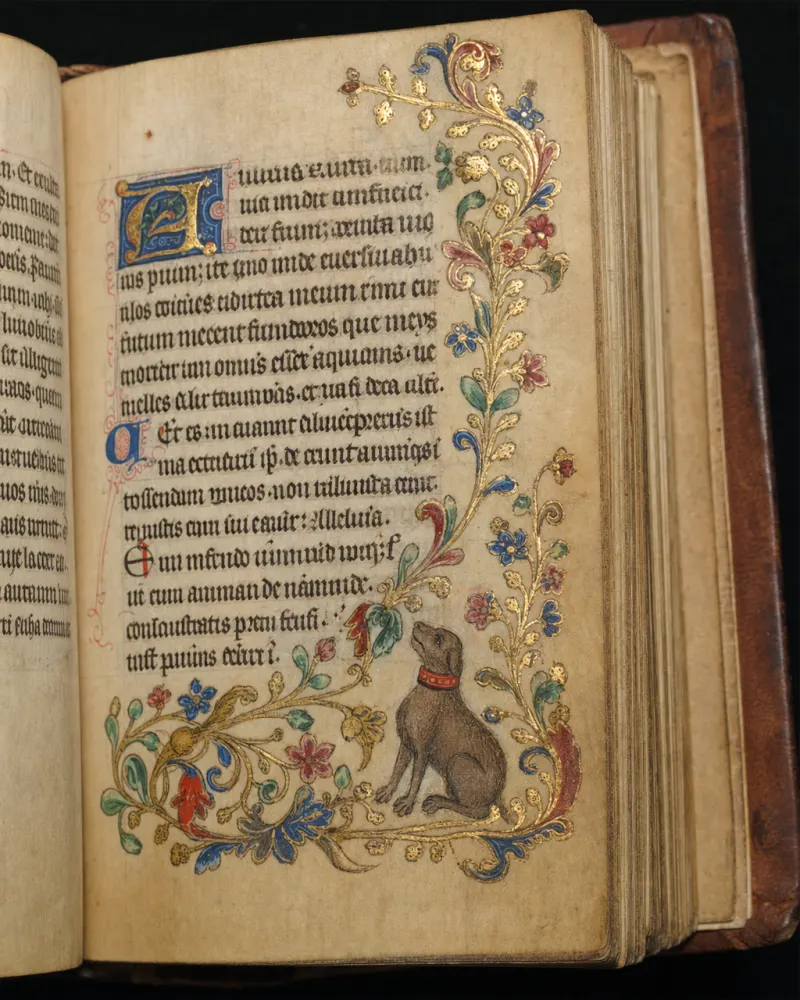
By the medieval period, dogs appeared in illuminated manuscripts, marginal scenes, courtly images, and religious art.

The hunting hound was the hero of the Master of Game (c. 1406-1413). The lapdog was a regular figure in books of hours, devotional manuscripts, and household psalters made for women of standing. Across France and England, surviving knight-and-lady tomb sculptures from the 12th-15th centuries place small dogs at the feet of the deceased.

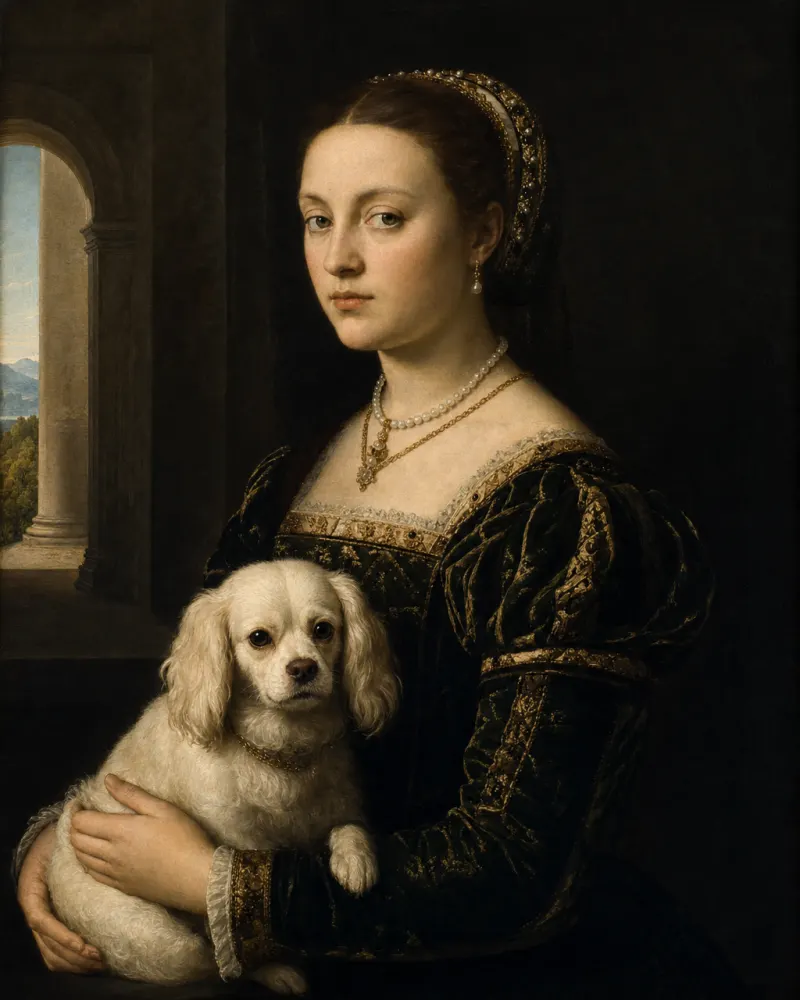
In Renaissance and early modern painting, the dog became more settled inside the formal room. Anthony van Dyck's seventeenth-century court portraits, particularly his English work for the Stuarts, made the small white spaniel — what we now call the Cavalier King Charles after the king who loved them — into a fixture of aristocratic family portraiture.

The dog softened the portrait. A room with a dog felt less staged. A nobleman with a hound seemed not only wealthy, but rooted in land, sport, and tradition.

§ V

The Seventeenth and Eighteenth Centuries: Dogs of Consequence

This is the great age of the dog as a subject of consequence.

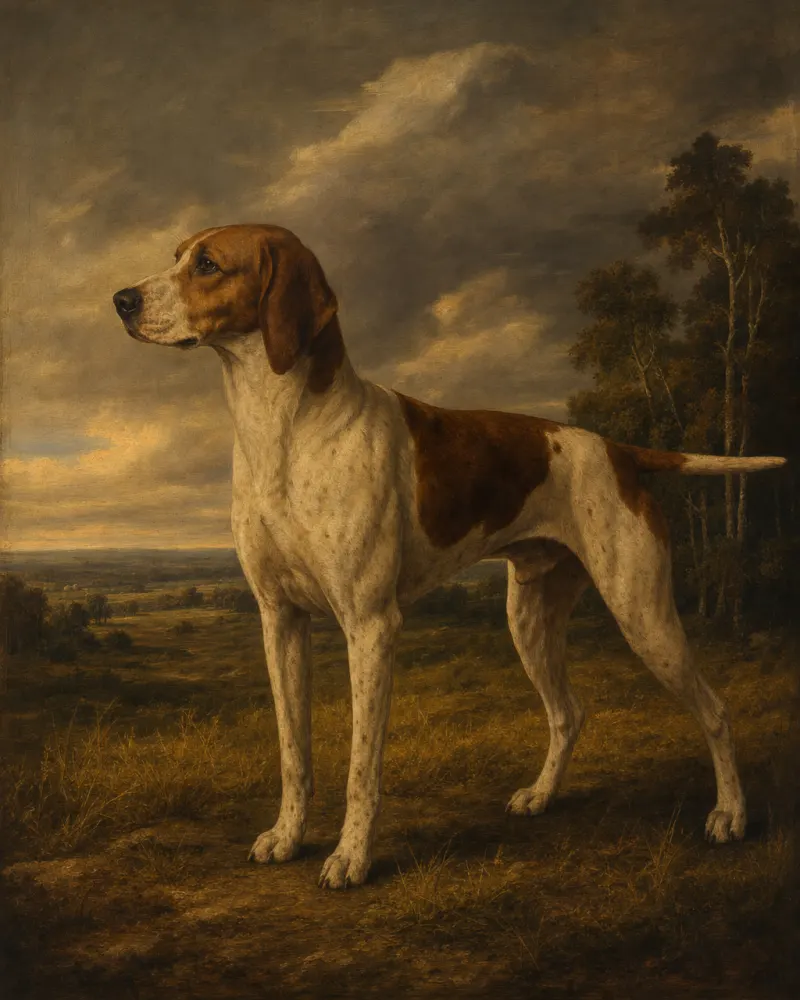
George Stubbs (1724-1806) — best known for his horses but a serious painter of hounds — insisted on anatomical truth. The result is a body of work in which the dog is rendered with the same scientific seriousness applied to the lord of the manor or his horse. Sawrey Gilpin and the Wootton brothers worked in the same register.

In domestic portraiture, Thomas Gainsborough used small white spaniels as inherited refinement made visible. In France, Jean-Baptiste Oudry brought the same seriousness to the hunting hounds of the French court.

These were not incidental animals. They were bred, trained, named, and valued. They belonged to houses, estates, kennels, and lineages.

The dog is not merely included. The dog is the reason for the picture.

§ VI

The Nineteenth Century: The Dog Becomes Emotional

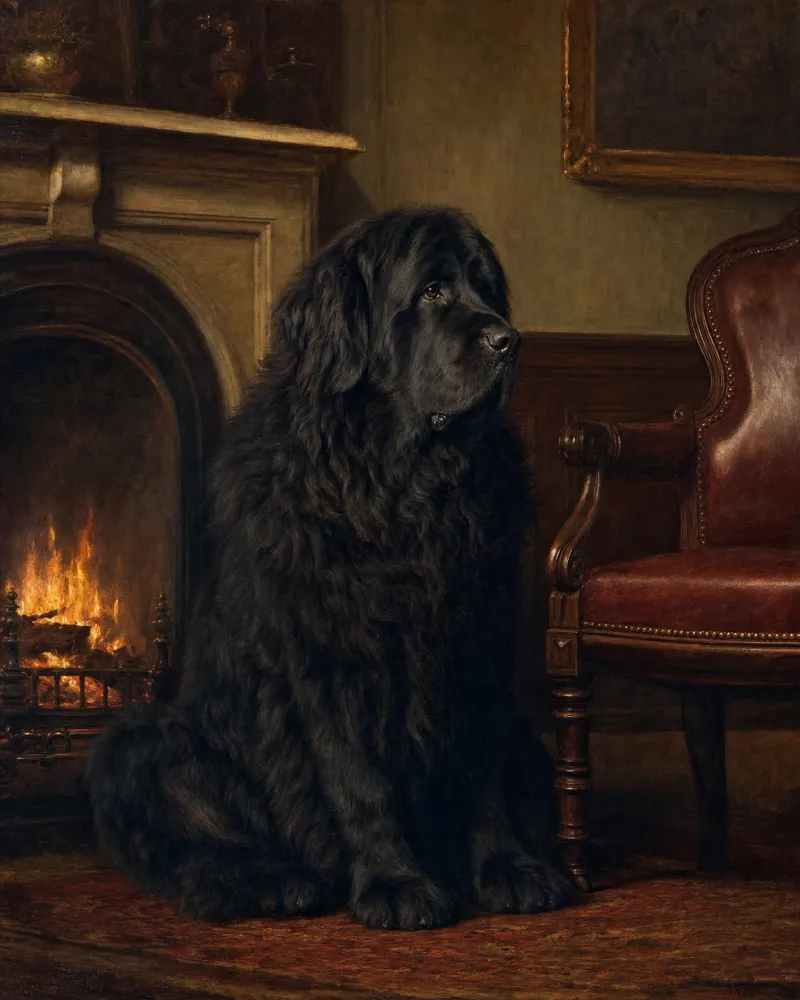
Sir Edwin Landseer (1802-1873) rose to be the most popular British painter of his generation on the strength of dog portraiture alone. His major canvases — Dignity and Impudence (1839) and The Old Shepherd's Chief Mourner (1837) — gave the dog moral and emotional weight that no painter before him had attempted at this scale.

Maud Earl (1864-1943) became the preferred dog painter of King Edward VII. Earl works regularly sell at Sotheby's and Christie's today in the $30,000-$120,000 range; for the longer treatment, see Antique Dog Portraits.

John Emms (1844-1912) specialized in foxhounds at rest in stable straw. Sir Alfred Munnings (1878-1959) carried the sporting tradition into the early 20th century with looser brushwork and brighter outdoor light than Stubbs would have used.

That blend of formality and feeling — dignified, but not cold — is what makes the Victorian dog portrait endure.

§ VII

Goya and the Solitary Dog

Not every old dog painting is domestic. Some are stranger.

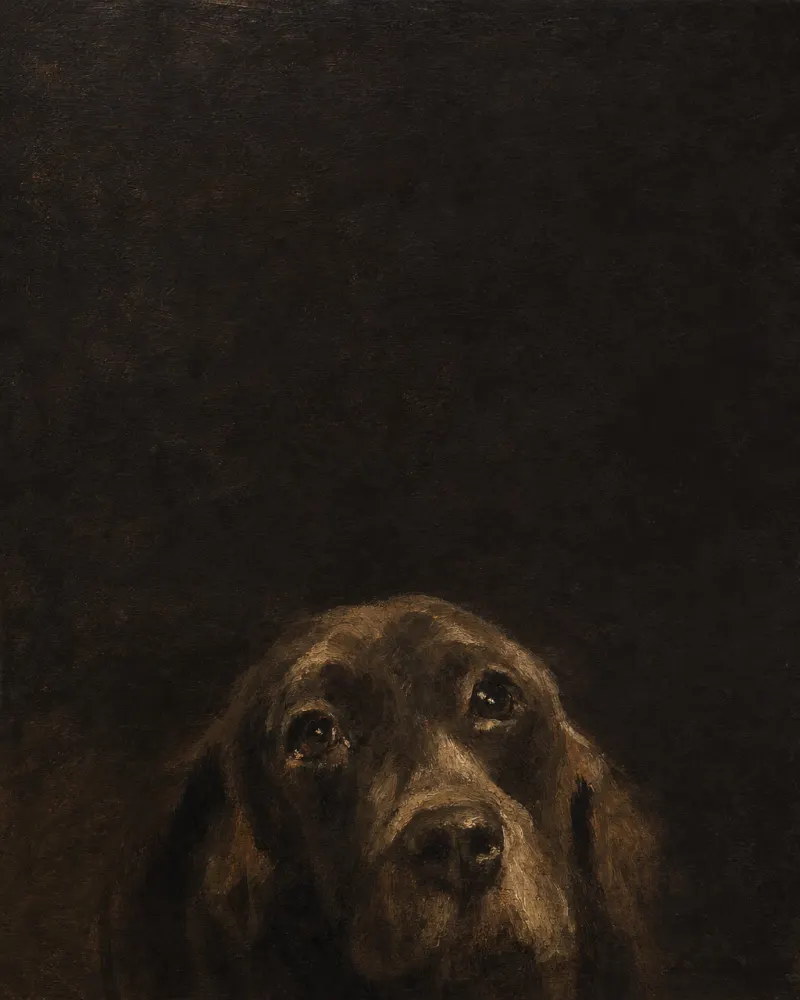
Francisco Goya's The Dog (c. 1819-1823), one of his Black Paintings applied directly to the walls of his house outside Madrid, is one of the most haunting images of a dog in Western art. The animal appears almost swallowed by space, its head emerging from a vast field of darkness and ochre.

It is not a pet portrait. It is not a sporting picture. It is not sentimental.

Yet it remains one of the most memorable dog images ever painted because the dog becomes a figure of isolation, endurance, and mystery.

Old dog paintings are not all comforting. Some are profound because they refuse comfort.

§ VIII

The Threshold of the Modern

By the late nineteenth and early twentieth centuries, the dog had fully entered popular, domestic, sporting, and modern visual culture.

Giacomo Balla's Dynamism of a Dog on a Leash (1912) brought the Italian Futurists' obsession with motion to the household animal. Cassius Marcellus Coolidge's Dogs Playing Poker series (1894-1910) brought the same dog into mass-market kitsch — for the longer treatment, see dogplayingpoker.com.

The modern dog portrait inherits all of this. The prehistoric dog beside the hunter. The Egyptian hound beside the household. The Roman guardian at the door. The Renaissance lapdog in the room. The sporting hound in the field. The Victorian mourner beside the coffin. The solitary dog in Goya's darkness.

Each one leaves something behind. Not a rule. A register. A way of seeing the dog as worthy of being held still.

The Modern Commission

Begin a portrait that belongs in this lineage.

The studio works in the classical-oil register, drawing on the lineage above as art history rather than as authorship claim. The portrait itself is AI-rendered, hand-reviewed by Mercy before it ships. The conventions — palette, light, composition — are the same conventions the painters above used. The production is modern.

Common Questions

Plainly answered.

What's the oldest known dog painting?
The earliest surviving dog images are rock-art compositions at sites like Bhimbetka (India) and Tassili n'Ajjer (Algerian Sahara), some possibly more than 10,000 years old.
Which painter's dog work is most famous?
Edwin Landseer is probably the most famous painter of dogs in the Western canon — his Dignity and Impudence (1839) and The Old Shepherd's Chief Mourner (1837) are widely reproduced. Goya's The Dog and Coolidge's Dogs Playing Poker are arguably more famous as individual images.
Are old dog paintings expensive?
Yes — major Victorian works (Landseer, Earl, Emms) regularly sell for five and six figures at Sotheby's and Christie's. For more on the current auction market, see Antique Dog Portraits.
Can I commission a portrait in the style of one of these eras?
Yes. The studio's classical-oil register is the closest direct continuation of the Stubbs / Landseer / Munnings tradition. For more on style choice, see Dog Portrait Artists.